
Polypropylene is a light-duty, easy to clean, webbing used in various applications including dog collars and leashes, luggage, health-related products, sporting goods, tote bags, and many others. Polypropylene webbing repels water, is mildew resistant, and low stretch.
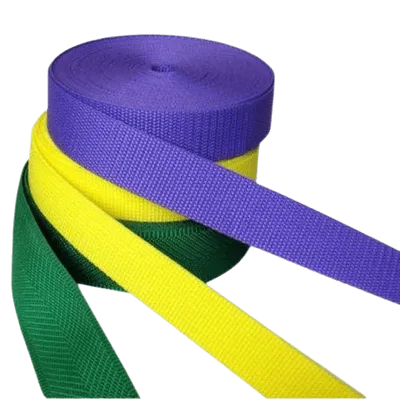
Polypropylene is much weaker, has a lower melting point, and is less resistant to abrasion than its polyester counterparts. However, it is much lighter and will absorb the least amount of water weight. It is a good choice for backpack straps, tarp tie-outs, and wider tree straps. With a tree strap wider than one inch, polypropylene becomes a good choice because it is so low in weight and stretch.
As a thermoplastic polymer or synthetic resin, polypropylene is a type of manufactured, or man-made, fabric.
One of the most valuable features of polypropylene resin is that it is highly heat resistant, colorfast, and waterproof. The polymers are incredibly lightweight, allowing many items, such as ropes, to float on top of the water.
While the varieties of polypropylene vary in thickness and strength, all types are mold, mildew, moisture and rot resistant, making them excellent choices for outdoor applications.
Polypropylene webbing is a strong, lightweight woven fabric made from polypropylene fibers. It is valued for its excellent moisture resistance, low stretch, mildew resistance, lightweight construction, and cost-effectiveness, making it suitable for a wide range of industrial and commercial applications.
Polypropylene webbing is widely used in backpacks, luggage, school bags, dog collars and leashes, safety equipment, sporting goods, hammocks, footwear, outdoor furniture, medical products, and various industrial straps and belts. Its durability and water-resistant properties make it suitable for both indoor and outdoor applications.
Polypropylene webbing is lighter and more water-resistant than nylon and polyester webbing. It absorbs minimal moisture, offers excellent chemical resistance, and is generally more economical. While nylon typically provides higher abrasion resistance and polyester offers superior UV performance, polypropylene remains a preferred choice for lightweight and cost-sensitive applications.
Yes. Polypropylene webbing is highly resistant to water, mildew, mold, and many chemicals. Its low moisture absorption and weather-resistant properties make it suitable for outdoor equipment, camping gear, marine products, pet accessories, and recreational applications.
Yes. Polypropylene webbing can be manufactured in various widths, thicknesses, colors, weave patterns, and strength specifications. Customization allows manufacturers to meet specific requirements for luggage, safety equipment, automotive products, pet accessories, and industrial applications.